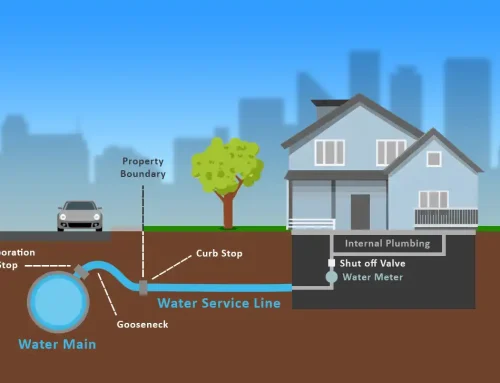


Lead water service lines are still a concern for many older Illinois homes. These underground pipes carry drinking water from the public water main to the house. If the pipe contains lead, corrosion can allow lead to enter the water before it reaches the faucet.
The difficult part is that lead is not obvious. Water can look clean, taste normal, and still contain lead.
For homeowners, the safest next step is to identify the service line material. If a lead line is confirmed, full replacement is the best long-term solution.
Quick Answer: Why Are Lead Service Lines Dangerous?
Lead service lines can release lead into drinking water as pipes age, corrode, or are disturbed. Lead exposure is especially concerning for children, infants, and pregnant women.
If a lead service line serves your home, full replacement is the most reliable way to reduce risk from that underground pipe.
How Lead Gets into Drinking Water
Lead usually enters drinking water when water reacts with older plumbing materials.
Common sources include:
- Lead service lines
- Older faucets and fixtures
- Lead solder
- Galvanized pipe connected to lead
- Older interior plumbing materials
In homes with a lead service line, the underground pipe is often one of the biggest potential sources because it carries water directly into the home.
Lead levels can also change. Water chemistry, pipe condition, temperature, and how long water sits in the line can all affect how much lead enters the water.
Why Older Illinois Homes Should Be Checked
Homes built before 1986 are more likely to have lead pipes, lead solder, or older plumbing materials. That does not mean every older home has a lead service line, but it does mean the line should be verified.
You may need to check your service line if:
- Your home was built before 1986
- The pipe entering the home is dull gray
- The pipe scratches easily with a key or coin
- A magnet does not stick to the pipe
- Your municipality lists your property as lead, suspected lead, galvanized requiring replacement, or unknown
- You received a notice from your city or village
If you are unsure, start with your local water department. Many Illinois communities now maintain service line inventories and may be able to tell you what is known about your address.
Why Full Replacement Matters
Partial replacement is not the ideal long-term fix. If part of the lead line remains, lead exposure can still be a concern.
Disturbing an old lead line can also temporarily increase lead levels in the water. That is why full replacement is preferred when a lead service line is confirmed.
A proper replacement removes the lead service line serving the home and installs an approved new water service line based on local requirements, site conditions, and municipal inspection rules.
What Homeowners Should Do First
If you think your home may have a lead water service line, take these steps:
- Contact your local water department. Ask whether your property is listed as lead, suspected lead, galvanized requiring replacement, or unknown.
- Review any municipal notice carefully. Some communities have specific timelines, inspection steps, replacement requirements, or assistance programs.
- Do not rely on clear water. Lead cannot be seen, smelled, or tasted.
- Use cold water for drinking and cooking. Hot water can contain higher lead levels, and boiling water does not remove lead.
- Talk to an experienced underground utility contractor. Replacement requires proper excavation, installation, inspection, and restoration.
How Replacement Usually Works
Every property is different, but most lead service line replacement projects involve:
- Confirming the service line material
- Coordinating utility locates
- Securing required permits
- Temporarily shutting off water service
- Removing or replacing the old line
- Installing an approved new water service line
- Completing municipal inspection
- Restoring affected areas
Some properties require traditional excavation. Others may be good candidates for directional boring, which can reduce disruption to yards, driveways, sidewalks, and landscaping.
The right method depends on access, line depth, soil conditions, municipal requirements, and the path from the water main to the home.
What to Do After Replacement
After the new line is installed, follow your municipality’s instructions for flushing, filter use, and water testing.
Post-replacement steps may include:
- Flushing interior plumbing
- Using a certified lead-reduction filter for a set period
- Testing water after replacement
- Following local water department instructions
These steps help reduce temporary exposure risk after the old line has been disturbed or removed.
Need Help Replacing a Lead Water Service Line?
Behm Enterprises helps homeowners replace lead water service lines in McHenry County, Lake County, Northern Cook County, and surrounding Northern Illinois communities.
Our team can evaluate the site, explain replacement options, coordinate required work, and complete the installation using traditional excavation or directional boring when appropriate.
If your home has a confirmed or suspected lead service line, schedule an evaluation with Behm Enterprises.
People Often Ask
Can you see lead in drinking water?
No. Lead cannot be seen, smelled, or tasted. Testing and service line identification are the best ways to understand risk.
Does boiling water remove lead?
No. Boiling water does not remove lead from drinking water.
Is cold water safer than hot water?
Yes. If lead is a concern, use cold water for drinking and cooking. Hot tap water can contain higher lead levels.
Is full replacement better than partial replacement?
Yes. Full replacement is preferred because it removes the lead service line instead of leaving part of the pipe in place.
Does every older Illinois home have a lead service line?
No. Not every older home has one, but homes built before 1986 are more likely to have lead or lead-related plumbing materials.
Who should I call first?
Start with your local water department to check your property’s service line records. Then contact an experienced underground utility contractor if replacement is needed.