

An underground water line leak is not always obvious. The pipe carrying water to your home is buried, so a problem can develop before you see standing water or another clear sign of a leak.
A wet area in the yard, lower water pressure, unexplained water use, or water surfacing near a driveway or foundation can all point to a damaged water service line.
The key question is whether the problem can be repaired in one area—or whether replacing the line makes more sense.
Quick Answer: What Are the Signs of an Underground Water Line Leak?
Common warning signs include:
- Wet or soggy ground during otherwise dry weather
- Water pooling or bubbling up in the yard
- An unexplained drop in household water pressure
- Unusually soft, washed-out, or settling soil
- Water appearing near a driveway, sidewalk, or foundation
- An unexplained increase in water use or the water bill
A higher water bill can help identify some leaks, but not every underground water-service leak will show up on your bill. That depends partly on where the leak is located in relation to the water meter.
If the symptoms continue after obvious indoor plumbing leaks are ruled out, the underground service line may need to be investigated.
What Is a Water Service Line?
A residential water service line is the underground pipe that carries water from the public water main toward your home.
Because the pipe is buried, the location where water appears above ground is not necessarily where the pipe is leaking. Water can move through surrounding soil before reaching the surface.
What Causes Underground Water Lines to Leak?
Water service lines can fail for several reasons, including:
- Aging or deteriorating pipe
- Corrosion
- Cracks or breaks
- Failed joints or connections
- Ground movement or settling
- Previous excavation or construction damage
The cause, location, pipe material, and overall condition of the service line all help determine whether a localized repair or replacement is the better option.
What Should You Do If You Suspect a Water Line Leak?
Start with a few basic checks.
- Rule out obvious indoor leaks.
Check toilets, faucets, water heaters, appliances, and visible plumbing. - Check your water meter if appropriate.
If no water is being used and the meter continues to register usage; there may be a leak somewhere in the metered portion of the system. - Look for changes outside.
Persistent wet soil, flowing water, erosion, or an unusually soft area can help narrow down the problem. - Contact your water utility or municipality when necessary.
Responsibility for different portions of a water service can vary by community. The utility may also need to determine whether the problem involves the public water system or the private service to the home.
If the problem appears to be on the residential service line, an experienced underground utility contractor can determine the appropriate next step.
Water Line Repair vs. Replacement: Which Makes More Sense?
Not every leak requires a completely new water service line.
| Condition | What May Make Sense |
|---|---|
| One isolated damaged area | Localized repair or partial replacement |
| Failed fitting or connection | Repair may be possible |
| Multiple leaks or previous repairs | Full replacement may be more practical |
| Significant corrosion or deterioration | Replacement may provide a better long-term solution |
| Recurring water-service problems | Replacement may make more sense than repeated repairs |
| Lead service line | Lead-line replacement requirements should be considered separately |
The goal is to correct the underlying problem without replacing more than necessary—or continuing to make isolated repairs to a line that is deteriorating.
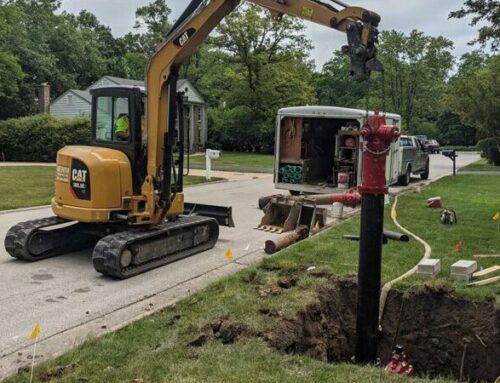
Behm Enterprises provides residential sewer and water line repair, including partial and complete water-service replacement.
Can a Water Line Be Replaced Without Digging Up the Entire Yard?
In some situations, yes.
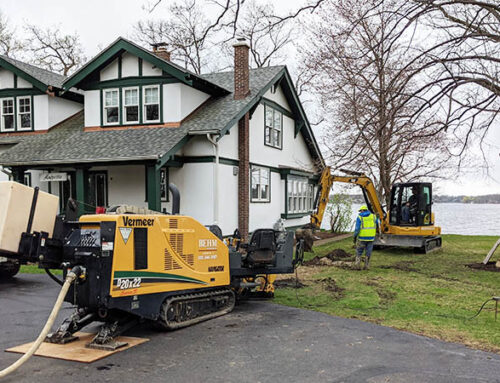
Traditional excavation may be the best option when direct access to the water line is needed. On other properties, directional drilling can be used to install underground water lines while reducing the amount of open excavation required.
This can be especially useful when a water service crosses:
- Driveways
- Sidewalks
- Established lawns
- Landscaping
- Other finished areas
Directional drilling is not right for every property. Existing utilities, access, connections, soil conditions, and the route of the new service all need to be considered.
What If Your Existing Water Service Line Is Lead?
A leaking lead service line should be treated differently from a conventional water-line repair.
Lead service lines are subject to specific replacement requirements, so repairing a short section may not be the appropriate solution.
If your home has a known or suspected lead service, see Behm’s Lead Water Service Line Replacement information for guidance specific to lead pipes.
Suspect an Underground Water Line Leak?
A wet yard does not automatically mean your water service is leaking. Drainage, groundwater, irrigation, and other underground conditions can sometimes create similar symptoms.
But persistent water during dry weather, unexplained pressure changes, or other signs of a possible service-line failure should not be ignored.
Behm Enterprises provides residential water-line repair and partial or complete water-service replacement throughout McHenry County, Lake County, and Northern Cook County.
Call Behm Enterprises at 815-344-0197 or request a quote to discuss your water-service problem.
Frequently Asked Questions
Can an underground water line leak without increasing my water bill?
Yes. A higher bill can indicate a leak, but whether an underground service-line leak affects metered usage depends on the location of the leak and the water meter.
Does a wet spot in the yard always mean the water line is leaking?
No. Drainage problems, groundwater, irrigation, and other conditions can also create wet areas. Persistent unexplained water during dry weather is a stronger reason to have the source investigated.
Who is responsible for a leaking water service line?
Responsibility can vary depending on the municipality, utility, and location of the damaged section. Contact your local water provider if you are unsure where public responsibility ends and homeowner responsibility begins.
Can a water line under a driveway be replaced?
Often, yes. Depending on site conditions, conventional excavation or a trenchless installation method such as directional drilling may be used. The best approach depends on access, existing utilities, connections, and the route of the water service.