

Water management is one of the most important factors in protecting a home’s foundation. In Northern Illinois, where clay-heavy soils and freeze–thaw cycles are common, proper foundation drainage is essential to keeping basements dry and structures stable.
Many homeowners don’t think about drainage until water appears in a basement or crawlspace. In reality, foundation drainage systems are designed to prevent problems long before they occur.
Understanding how these systems work can help homeowners recognize why proper excavation and installation matter during construction.
Why Foundation Drainage Is So Important
Foundations are constantly exposed to groundwater and rain runoff. Without a system to move water away from the structure, hydrostatic pressure builds up against basement walls.
Over time, this pressure can cause:
- Basement leaks
- Foundation cracks
- Mold and moisture issues
- Structural movement
- Long-term water damage
Drainage systems are designed to relieve this pressure by directing water safely away from the foundation.
In regions like McHenry County, Lake County, and Kane County, clay soils tend to retain moisture. This means water drains slowly, increasing the importance of proper drainage design around the home.
What Are Footing Drains?
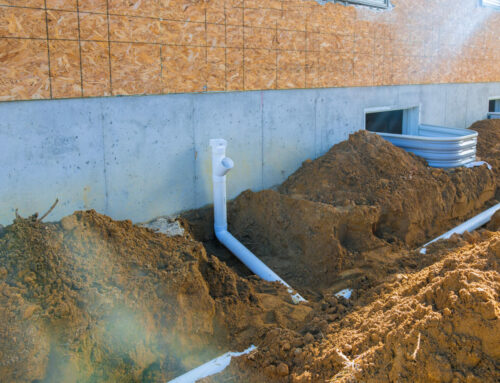
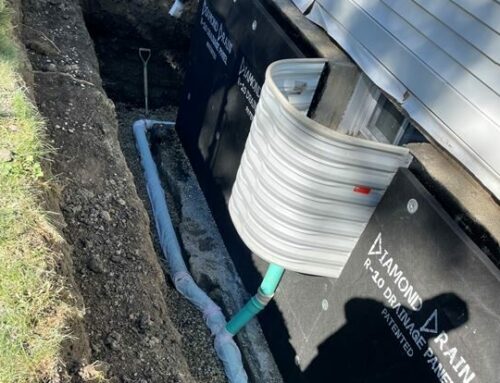
Footing drains are a key component of residential foundation drainage systems. These drains are installed along the exterior perimeter of a home at the base of the foundation footing.
The system typically includes:
- Perforated drain pipe (often called drain tile)
- Gravel or drainage stone
- Filter fabric to prevent clogging
- A drainage outlet or sump system
When groundwater reaches the foundation area, the perforated pipe collects the water and carries it away from the home.
This prevents water from building up around the foundation walls.
How Foundation Drain Tile Systems Work
Drain tile systems operate through gravity and natural water flow. The pipes installed around the footing allow water to enter through small perforations.
From there, the system moves water to a discharge location such as:
- A sump pump system
- A stormwater drainage line
- A daylight outlet on a sloped property
Proper grading around the home also plays an important role in directing surface water away from the foundation.
When designed correctly, the drainage system works continuously without homeowners ever noticing it.
Common Foundation Drainage Problems
Even well-designed systems can experience issues over time if they are not installed correctly or maintained properly.
Some of the most common problems include:
- Drain pipes clogged with soil or sediment
- Improper slope in the drainage line
- Crushed or damaged drain tile
- Inadequate gravel backfill
- Poor surface grading near the foundation
If any part of the drainage system fails, water can begin accumulating near the structure.
That’s why installation during excavation is such a critical step in the construction process.
Signs Your Foundation Drainage May Be Failing
Homeowners may notice early warning signs that drainage issues are developing around their foundation.
These can include:
- Water pooling near the home after rain
- Damp basement walls
- Efflorescence (white mineral deposits on concrete)
- Musty odors in basements or crawlspaces
- Soil erosion near foundation edges
Addressing drainage issues early can help prevent more serious structural problems.
Why Excavation Planning Matters
Foundation drainage systems are installed during the excavation phase of construction. At this stage, contractors evaluate soil conditions, slope, and groundwater behavior to design a system that protects the structure.
Proper planning ensures:
- Correct footing depth
- Reliable drainage slopes
- Long-term water control
- Stable soil conditions around the foundation
In Northern Illinois, where seasonal moisture changes affect soil behavior, this preparation is especially important.
Long-Term Protection Starts Below Ground
Once a home is built, most of the foundation drainage system becomes hidden underground. But its performance continues to protect the structure for decades.
When installed correctly, footing drains and drain tile systems quietly manage groundwater, reduce hydrostatic pressure, and help keep basements dry.
For homeowners planning new construction or evaluating existing drainage systems, understanding these components can make a significant difference in long-term home performance.
Concerned about drainage around your foundation?
Proper drainage systems are critical to protecting basements and preventing long-term water issues. If you’re planning a new home, adding drainage improvements, or noticing signs of water around your foundation, it’s worth evaluating your site conditions.
Contact the team at Behm Enterprises to discuss your property and drainage needs.