

Grading and excavating are critical first steps in construction and site development. Whether you’re preparing land for a new home, driveway, utility installation, or commercial project, these processes ensure the ground is stable, properly sloped, and ready to support long-term performance.
In Northern Illinois — especially in McHenry County and surrounding areas — soil conditions, clay content, and drainage challenges make professional grading and excavation especially important. Done correctly, they help prevent water issues, foundation movement, and costly repairs later.
Grading and excavating are site-preparation processes used to shape land for construction. Excavation removes soil to create space for foundations, utilities, and structures, while grading levels and slopes the land to control drainage and ensure long-term stability.
What Is Excavating?
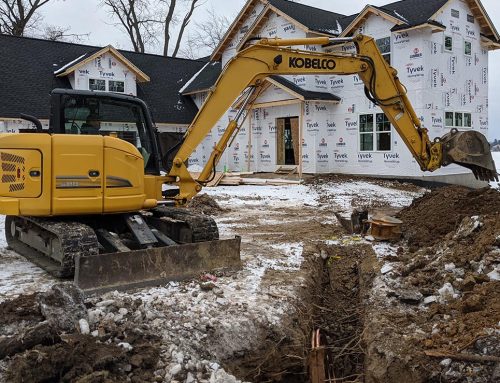
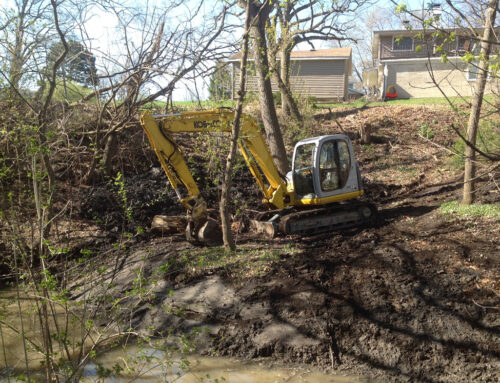
Excavating is the process of removing earth to prepare a site for construction or underground work. It’s typically the first phase of site preparation and creates space for foundations, basements, utilities, and drainage systems.
Excavation commonly includes:
- Removing soil, rock, roots, and debris
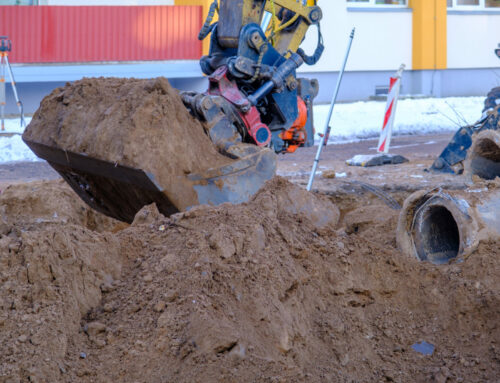
- Digging trenches for sewer, water, and utility lines
- Excavating foundations and basements
- Hauling excess material off site
In Northern Illinois, excavation must account for variable soil conditions, frost depth, and existing infrastructure — all of which require experience and careful planning.
Why Proper Excavation Matters
Poor excavation can lead to uneven settling, damaged utilities, and structural problems. Accurate excavation helps ensure foundations sit on stable ground and utilities are installed safely and correctly the first time.
What Is Grading?
Grading is the process of shaping and leveling the land after excavation. Instead of removing material, grading redistributes soil to create proper slopes and elevations across the site.
Proper grading helps:
- Direct water away from foundations and structures
- Prevent standing water and erosion
- Create smooth, build-ready surfaces
- Improve long-term site drainage and stability
In areas like McHenry County, where heavy rainfall and freeze–thaw cycles are common, grading plays a major role in protecting foundations, driveways, and landscapes.
Common Types of Grading
- Rough Grading – Establishes overall site shape and elevation
- Finish Grading – Fine-tunes surfaces before paving or landscaping
- Drainage Grading – Controls water flow away from structures
- Cut and Fill Grading – Balances soil by cutting high spots and filling low areas
Grading vs. Excavating: What’s the Difference?
| Excavating | Grading |
|---|---|
| Removes soil to create space | Shapes soil for slope and drainage |
| First phase of site work | Follows excavation |
| Focuses on depth and location | Focuses on elevation and flow |
| Used for foundations and utilities | Used for stability and water control |
In simple terms, excavation creates the space — grading makes the site work properly.
Why Grading and Excavating Matter in Northern Illinois
Local conditions make proper site preparation especially important.
Drainage and Water Control
Improper slopes can cause water to pool near foundations, leading to cracks, leaks, and erosion. Grading ensures water flows away from buildings, even during heavy Midwest rain events.
Foundation Stability
Uneven or poorly compacted soil can shift over time. Professional excavation and grading help prevent settling and long-term structural issues.
Code Compliance and Safety
Municipal projects and utility installations often require precise elevations and slopes. Experienced contractors understand local requirements and jobsite safety standards.
Long-Term Cost Savings
Correct site preparation reduces the risk of future repairs, drainage corrections, and foundation problems.
Why Choose Behm Enterprises
Grading and excavation aren’t just about moving dirt — they’re about understanding how land behaves over time. In Northern Illinois, that means accounting for soil composition, drainage patterns, and seasonal weather changes.
Behm Enterprises has decades of hands-on experience serving McHenry County and surrounding communities. Our team works on residential, commercial, and municipal projects, delivering site preparation that’s built to last.
What sets Behm apart locally:
- Deep knowledge of McHenry County soil and drainage conditions
- Professional equipment for precise excavation and grading
- Experience with utilities, site prep, and infrastructure projects
- Clear communication and a safety-first approach
- Proven results across Northern Illinois job sites
When you work with Behm, you’re choosing a local contractor who understands the land — not just the equipment.
People Also Ask (FAQs)
What comes first, grading or excavation?
Excavation typically comes first to remove soil and create space. Grading follows to shape the land and ensure proper drainage.
Do small projects still need grading?
Yes. Driveways, patios, and utility trenches all require proper grading to prevent water problems and premature failure.
Can poor grading cause foundation problems?
Absolutely. Incorrect slopes can lead to water pooling, soil erosion, and foundation movement over time.
How do I know if my property has drainage issues?
Signs include standing water, soil erosion, water near foundations, or soggy areas after rainfall. A professional evaluation can identify the cause.
Is grading required for utility installation?
In most cases, yes. Sewer, water, and storm lines must follow precise slopes to function correctly and meet local requirements.
Start Your Project on Solid Ground
If you’re planning construction, utility work, or site development in McHenry County or surrounding Northern Illinois communities, proper grading and excavation are essential.
Contact Behm Enterprises today to discuss your project, evaluate your site, and ensure your land is prepared correctly from the start.