

A sewer backup does not automatically mean you need a new sewer line. Some problems can be cleared or repaired in one area. Others involve enough structural damage that partial or complete replacement is the more dependable choice.
The decision should be based on the condition of the pipe, the location of the problem, and how much of the sewer line is affected.
Quick Answer: Does Your Sewer Line Need Repair or Replacement?
A repair may be appropriate when damage is limited to one section and the rest of the pipe remains in usable condition.
A replacement may make more sense when the pipe is collapsed, severely deteriorated, damaged in several areas, or causing recurring problems because the pipe itself is failing.
| What is Found | Possible Solution |
|---|---|
| Grease, sludge, debris, or removable roots | Snaking or hydro jetting |
| One damaged joint, crack, or short section | Localized repair or partial replacement |
| Limited damage in a pipe that can support a liner | Pipe lining |
| A longer deteriorated section | Pipe bursting or replacement |
| Collapse, major separation, or widespread damage | Partial or complete replacement |
A residential sewer camera inspection can help locate blockages and visible structural defects before a repair method is selected.
When a Sewer Line Repair May Be Enough
A localized repair may be the better option when:
- The problem is confined to one area.
- The surrounding pipe remains structurally sound.
- One crack, joint, or damaged section can be corrected.
- The repair is expected to provide a reliable result.
The problem may only require snaking or hydro jetting when the pipe remains structurally usable.
Tree roots do not automatically require full replacement. Roots may be removed from a usable pipe, but a crack or separated joint may also need repair if roots continue to enter.
When Replacement May Be the Better Choice
Partial or complete replacement may be more practical when:
- The pipe has collapsed.
- Several sections are cracked, separated, or offset.
- The pipe is extensively corroded or deteriorated.
- Structural problems are causing repeated backups.
- Previous repairs have not corrected the underlying failure.
Repeated backups alone do not prove that replacement is necessary. Buildup, roots, structural damage, or more than one condition may be involved.
Homeowners who are still trying to identify the problem can review the common causes and warning signs of sewer line damage.
How Can a Residential Sewer Line Be Repaired or Replaced?
The best method depends on the pipe condition, depth, route, access, nearby utilities, and surrounding property.
- Pipe lining repairs certain damaged pipes from within the existing line.
- Pipe bursting breaks apart the old pipe while pulling a replacement pipe into its place.
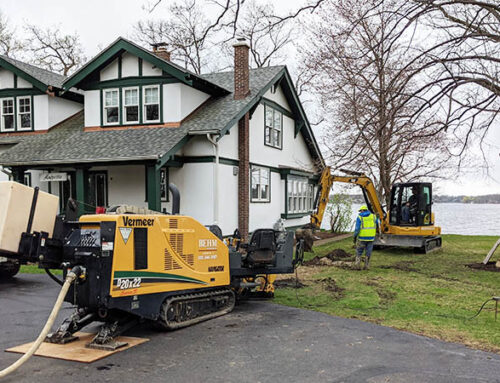
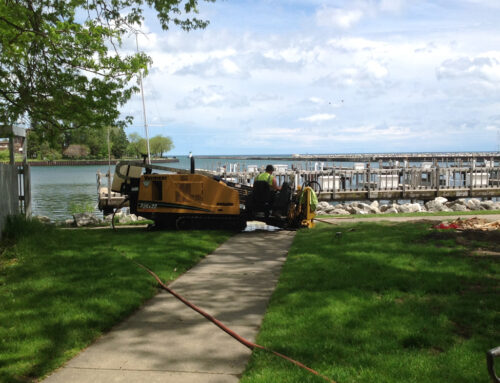
- Residential directional drilling may be used to install a new sewer line while limiting open excavation along the route.
- Traditional excavation provides direct access when a pipe has collapsed, connections must be rebuilt, the route or slope needs correction, or trenchless work is not suitable.
Trenchless methods can reduce surface disruption, but no method is appropriate for every property.
What Should You Ask Before Approving the Work?
Ask the contractor:
- What does the inspection show?
- Is the damage isolated or widespread?
- Is the remaining pipe structurally usable?
- Why is the recommended method appropriate?
- How much excavation and property restoration will be required?
- What work, permits, testing, and warranty are included?
The recommendation should address the actual cause of the problem without replacing usable pipe unnecessarily—or repairing one short section when the surrounding line is also failing.
Get a Clear Sewer Line Recommendation
Behm Enterprises provides residential sewer camera inspections, hydro jetting, localized repair, pipe lining, pipe bursting, directional drilling, excavation, and partial or complete sewer-line replacement.
Behm serves homeowners throughout McHenry County, Lake County, and Northern Cook County.
Call Behm Enterprises at 815-344-0197 or request service online to have your sewer line evaluated and discuss the appropriate repair or replacement option.
Frequently Asked Questions
Does one sewer backup mean I need a new sewer line?
No. A backup may be caused by a removable blockage or structural damage. The cause should be identified before replacement is recommended.
Is repairing a sewer line always less expensive?
A localized repair usually involves less work, but it may not provide the best long-term value when other sections of the pipe are also deteriorating.
Is trenchless sewer replacement always possible?
No. Pipe condition, route, depth, access, utilities, connections, and soil conditions can affect whether a trenchless method is suitable.